 Предлагаем вашему вниманию события, собранные в один Дайджест, которые открывают двери в яркую и насыщенную жизнь нашей Центра. Эти материалы расскажут о ключевых моментах, которые определяют нашу работу, ценностях и миссии. Каждый кадр — это уникальная возможность прикоснуться к нашей истории, событиям и достижениям.
В роликах вы увидите нашу ежедневную деятельность, важные встречи, успешные проекты и вдохновляющие истории участников. Они отражают не только нашу профессиональную деятельность, но и ту атмосферу, которая объединяет всех членов РЦ. Мы гордимся нашими инициативами и рады делиться ими с вами.
Приглашаем вас окунуться в этот мир через наши видео! Надеемся, что они помогут вам лучше понять нас, вдохновят на сотрудничество или просто вызовут улыбку. Приятного просмотра!
Дайджест
A poultry farming business has appeared in the small village of Sintas, Aksu rural district, Pavlodar region.
There are people in the village who breed cattle and earn a living from it, as they say. But there was no one who "kept" geese or bred other poultry.
This summer, a farm of this type appeared in Sintas. And all because Ermek Suleimenov, a 52-year-old villager, took part in the National Project for Entrepreneurship Development and presented his business project. Apparently, Ermek's project was immediately supported by the coordinators and won a non-refundable grant of 400 MCI. With these funds, the "newly minted" businessman bought 500 poultry, including more than two hundred goslings.
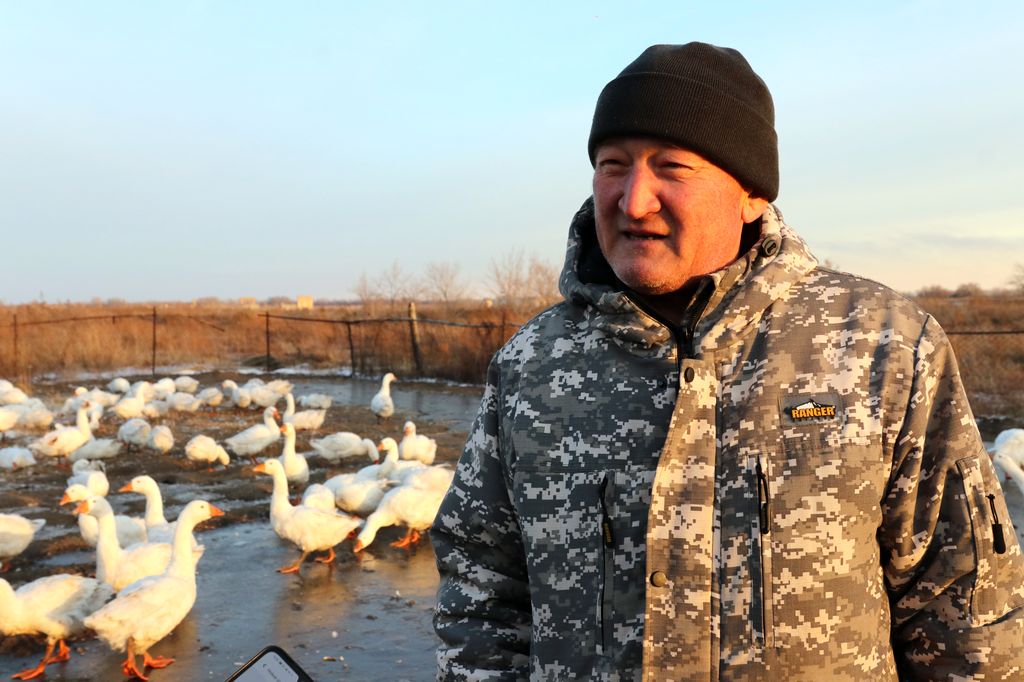 "When I was little, our mother "kept" poultry at home. I have watched them since childhood, so much of their care is familiar to me. In other words, there is basic experience. After thinking about it, I decided to try to do this poultry farming, already at my age. Especially since where I live is the very outskirts of the village, this side where the meadow is located, and this is important primarily for breeding birds "like ducks and geese," says entrepreneur Ermek Suleimenov.
However, it was not easy for Ermek, because geese require special care, especially goslings. It was difficult for a single man. Some goslings, only one week old, soon died. But the rest of the goslings of the Linda breed, brought from Russia, have already grown up, almost to a "marketable appearance." By the New Year, he will put them up for sale.
"They say that chickens are counted in the fall. The geese grew well. Now, after the snowfall, some of them are suitable for slaughter. In the winter, I will sell everything and then next spring I will buy goslings again.
Next year, I have a plan to buy about a thousand goslings. In addition, I am thinking of hiring one person as an assistant," says Ermek Suleimenov. Ermek is a disabled person of the second group, so he knows that without an assistant he will not be able to work with such a volume of geese, according to him, alone. There are requests for goose meat from Astana, not to mention Pavlodar. Nevertheless, Ermek says that first of all he will give priority to his neighbors and other fellow villagers.
Kairbolat Aznabaev, who lives in the village named after Mamait Omarov, in the Aksu rural district, Pavlodar region, dreamed of becoming an officer since childhood. Having grown up, he went to serve in the police and almost achieved his goal. However, the young man subsequently became unfit for service in the internal affairs bodies due to a foot disease.
Kairbolat, a disabled person of the third group, was unemployed for two years. This year, having learned about the National Entrepreneurship Development Project, he immediately decided to participate in it. The reason is that there is already positive information about such a program. His father, Nurtai Aznabaev, won a grant in 2021, studying the basics of entrepreneurship under the Bastau Business program. Kairbolat also studied online, received a certificate and presented his business project.
"I could not pass the first stage of the competition. There were shortcomings in my business plan. After consulting with my father, I corrected the shortcomings and passed the second stage of the competition and was given a one-time non-refundable subsidy in the amount of 400 MCI," says the "newly minted" businessman Kairbolat Aznabaev.
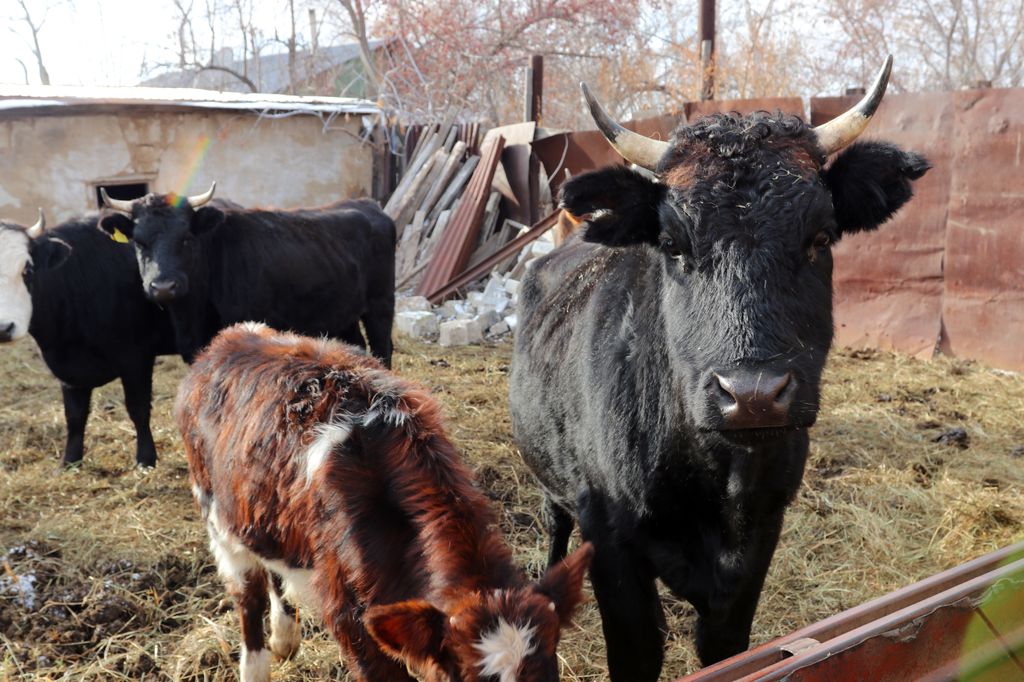
With this money, Kairbolat bought two cows, four bulls and five calves, and also built a barn for them.
This summer in the Pavlodar region there was a lot of rain, and the grass grew in abundance. In the rural area of Aksu, a tributary of the Irtysh River, flows near Kairbolat's livestock farm. There was no shortage of water and the grass grew in abundance, so he should have enough prepared feed this winter.
"Since we grew up in the countryside since childhood, we are close to animals, so to speak, we have experience in handling/handling cattle. Moreover, for now I will use my father's equipment for preparing feed, which is also important in my business," says the owner of the business Kairbolat Aznabaev.
Kairbolat's beloved wife has two children, and they will be his "first" assistants in business. In the future, he plans to expand his business and increase the livestock. Therefore, in such a situation, it is possible to obtain pasture lands. That is, the plans of the former policeman and now farmer are huge, and he shows by his example that the main thing is not to sit still, but to do something useful for the family and society as a whole.
Suyinbay Babarhan, living in the village of Bereke, Aksu rural district, Pavlodar region, is a participant in the National Project for the Development of Entrepreneurship. Previously, a disabled person of the third group, he joined the ranks of the unemployed. He completed training and received a certificate of training "Business Bastau", defended a business plan and received a grant in the amount of 400 MCI for "his business", i.e., he became a private entrepreneur.
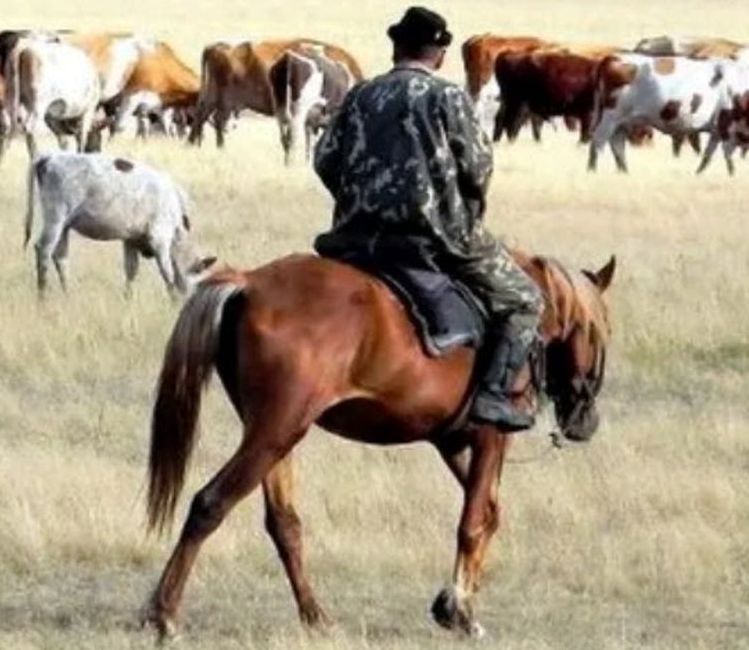
Suyinbay's chosen direction is animal husbandry. The Kazakh boy, who knew the proverb "My animal is the mercy of my soul" by heart from an early age, was close to such an occupation as cattle breeding.
He bought cattle with financial support from the state, i.e. funding for the purchase of cattle came through a state grant.
"Now the purchased livestock will become a source of income for our family. After all, my wife is disabled and cannot work, and we have three children.
The state helps and "blesses" people with such programs, thanks to which our family now has an idea to start breeding cattle," says business owner Suyindyk Babarkhan.
Suyindyk has many plans. In the future, he intends to become, as he says, a "medium-sized" farmer and provide the villagers with meat and milk.
We wish him luck in these endeavors.
Botakoz Dauhan, a resident of Kalkaman village, a rural area of Aksu city, Pavlodar region, moved with her family from Mongolia in 2019. Her husband Argynbay now works on the railway. Botakoz, a mother who gave birth to five sons, was unemployed until she received a grant from the National Entrepreneurship Development Project.
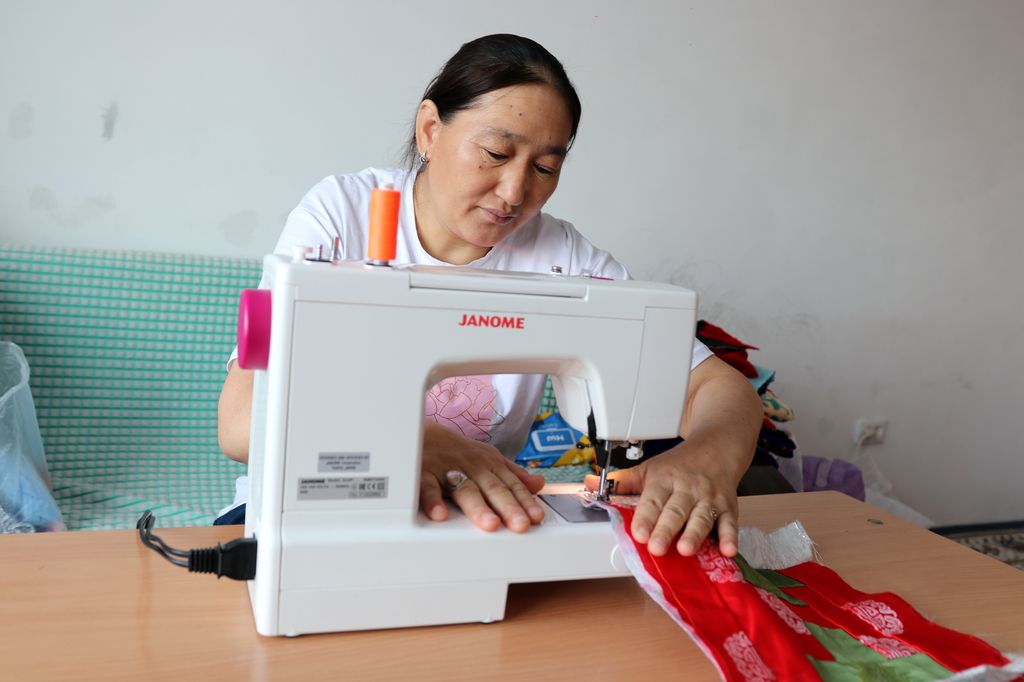 She did not have the opportunity to work before, because one child was constantly sick and required maternal care. This summer, when she received an offer to participate in the National Project, she agreed without hesitation. Opening a sewing workshop has been her dream since childhood. The reason is that she is not a newbie in sewing, which she learned from her mother. Botakoz completed a business training course and received a certificate, and then received a non-refundable grant of 1,476,800 tenge. As a result, she bought a sewing machine, an iron and other tools she needed.
"For two or three months, I have been sewing items such as blankets and pillows. There are no large orders, since I do not have advertising on social networks. For now, I fulfill requests from friends and relatives who know me," says Botakoz Dauhan.
Now she continues to work in one room of her house. If she had a separate room for a workshop, she is sure that there would be more orders. This would also be good for the residents of Kalkaman village. There is no sewing workshop in the village, so the residents who know that she provides seamstress services go to her. Botakoz intends to go to the akim of the village and ask for a room for a workshop. After all, the President himself mentions support for small and medium-sized businesses every time in his Address, and she believes that the akim should help her.
Botakoz has a dream of attracting girls to her business who will become worthy wives for her five sons.



 Русский
  Қазақша
  English


